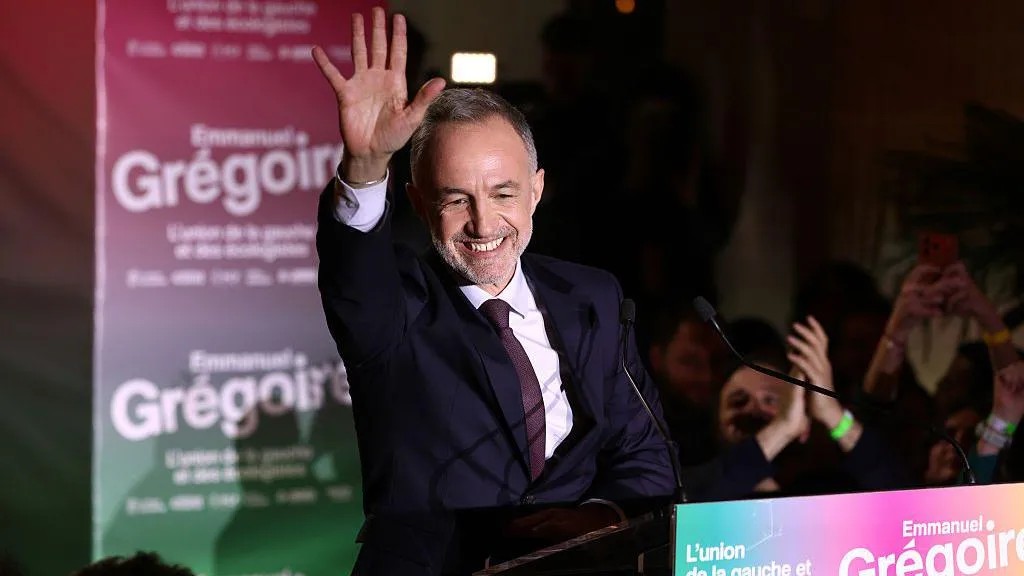
France’s Socialist-led administrations kept control of the country’s four biggest cities — Paris, Marseille, Lyon and Lille — in local elections that offered a boost to established parties ahead of next year’s presidential vote.
The night also saw gains for both the far left and far right, with notable wins for a Le Pen ally in Nice and for France Unbowed (LFI) in Roubaix, underscoring a fragmented political map.
Many attempts to stitch alliances between Socialists, Greens and the far left mostly backfired, however.
In traditional Socialist strongholds such as Clermont-Ferrand and Brest, voters drifted toward centrist and right-wing options instead.
In Paris, Marseille and Lille incumbents who deliberately kept their distance from LFI were comfortably re-elected, a result that reflected both local issues and sensitivities over accusations of antisemitism within parts of the far-left movement.
Lyon stood apart: the green mayor Gregory Doucet teamed up with LFI and still held on, helped in part by a lackluster campaign from his main right-wing challenger, businessman Jean-Michel Aulas.
The far left faced its own controversies during the campaign — including criminal charges against a parliamentary aide and inflammatory remarks by its leader — which fueled calls from some quarters to shun alliances with LFI.
Despite that, several Socialist and Green candidates struck pacts with the far left after the first round, moves critics labelled opportunistic.
Those arrangements failed to deliver in cities like Toulouse, Strasbourg, Poitiers, Limoges and Tulle.
LFI pointed to victories in places such as Saint-Denis and Roubaix as proof of momentum, framing the results as a boost for their challenge to President Macron’s policies.
The far right had mixed fortunes.
It fell short in targets like Marseille and Toulon where opponents united to block them, but it made inroads in smaller towns including Montargis, Carcassonne and La Seyne-sur-Mer.
Nice produced one of the clearest center-right upsets: Eric Ciotti defeated incumbent Christian Estrosi, a result hailed by the far right as evidence of a changing conservative bloc willing to work with Le Pen’s camp.
Centrist forces also had reasons to celebrate.
The pro-Macron Renaissance party won Bordeaux with Thomas Cazenave, and Edouard Philippe secured Le Havre — a result that keeps alive talk of a centrist candidacy for 2027.
Overall, mainstream parties on the left, right and center collected the most victories, leaving them optimistic about confronting extremist contenders in a potential presidential run-off.
The election night, though, also highlighted a worrying possibility: if a future contest pits two fringe candidates against each other, mainstream unity could be far harder to achieve.