A major trade agreement signed this week will send more Australian beef to Europe by removing most export tariffs and easing market access.
The pact, negotiated over about eight years, is valued at roughly A$10 billion and was finalised on Tuesday.
Nearly all EU duties on a range of Australian farm products will be eliminated, covering wine, fruit and vegetables, olive oil, seafood, most dairy, and cereals such as wheat and barley.
Officials say the change should make Australian exports more competitive across the bloc.
The agreement also settles several food-naming disputes.
Australia can continue to label domestically produced Italian-style sparkling wine as prosecco, though that name will be phased out for goods shipped abroad over a decade.
Producers in Australia will still be able to use names like parmesan, while feta will face grandfathering provisions and extended sunset periods in line with EU protected-names rules.
Australia becomes the only non-Italian country approved to use the prosecco name for domestic sales.
The government estimates wine exporters will save about A$37 million under the deal, and Australian consumers can expect lower prices on a range of European groceries, from wine and spirits to biscuits, chocolate and pasta.
Officials described the pact as a two-way opening of markets for both sides.
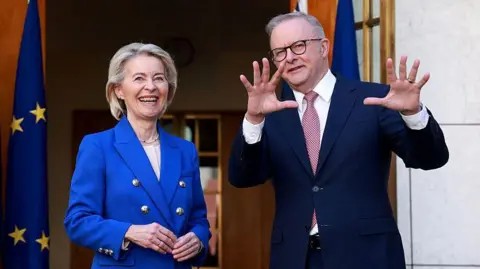
Prime Minister Anthony Albanese underlined the cultural links between Australia and Europe, pointing to migrant communities that shaped local food traditions.
European Commission President Ursula von der Leyen framed the agreement as strengthening a long-term partnership and boosting collective resilience amid shifting global trade tensions.
Not everyone welcomed the outcome.
Meat and Livestock Australia said the deal shortchanged red-meat producers by granting an annual beef quota of about 30,000 tonnes — a rise from the current 3,389 tonnes but below the 50,000-tonne figure industry representatives had sought.
Alongside trade terms, the two sides signed a new security and defence cooperation pact covering the defence sector, counter-terrorism, space and maritime security.
The EU and Australia also pledged closer collaboration on critical minerals projects, including lithium and tungsten, and noted Australia’s recent social-media rules aimed at protecting under-16s.