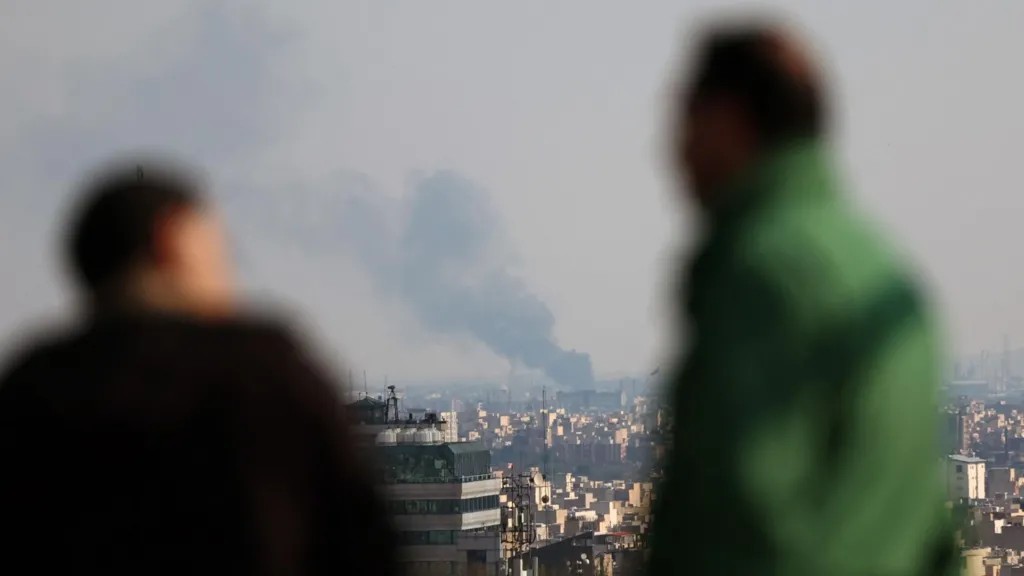
A month of air strikes, economic collapse and harsh crackdowns has left many Iranians living on edge, sleepless and worried about survival.
In Tehran a young woman — given a pseudonym for her safety — describes the moment the war came into her office: a violent blast, smoke on the skyline and instant panic as colleagues fled to the roof.
Her employer closed the business that day and let staff go, cutting off the steady wages that once sustained them.
She now struggles to sleep, relying on strong painkillers to numb constant anxiety.
With prices already surging — food costs rose about 60% in the previous year — and sanctions and domestic mismanagement eroding savings, she says there is no safety net and loans from friends are impossible because everyone is stretched thin.
Many people she knows fear unemployment and believe that if the economic collapse continues, unrest will follow.
For some, the war is also viewed through a political lens: they hope the crisis might hasten the end of the regime.
A nurse working near Tehran, also speaking under a false name, warns that medicine shortages are beginning and fears what would happen if hospitals become targets.
She recounts harrowing scenes she has treated — bodies maimed beyond recognition and a pregnant woman killed by a strike weeks before her due date.
Those images revive memories her family passed down from the Iran-Iraq war of the 1980s, and she says the repetition of history is chilling.
The scale of civilian suffering she has seen has hardened her resolve to help, but also deepened her dread about what comes next.
A former protester who spent time behind bars after the recent anti-government demonstrations remains in hiding.
Shot during street clashes, he shows the fragments still lodged in his body and keeps a supply of antibiotics and painkillers in case violence flares again.
He and others grew up with stories of brutality by security forces — accounts that have shaped a generation’s fear and anger.
Many survivors say they will not rest until they see political change.
The BBC spoke to trusted sources in six cities, gathering accounts from shopkeepers, taxi drivers, public servants and others.
Across these conversations a clear picture emerges: deepening economic strain, mounting political frustration and the constant risk of violence.
Public dissent carries grave risk.
Security forces and loyalist groups patrol the streets, and the government’s response to recent protests included mass arrests, torture and large numbers of deaths, according to witnesses and activists.
With livelihoods vanishing, medicine beginning to run scarce in some areas, and the prospect of further strikes and repression, ordinary Iranians say they are caught between fear for their lives and frustration at a state they believe has failed them.
For many, the immediate future feels uncertain and perilous.