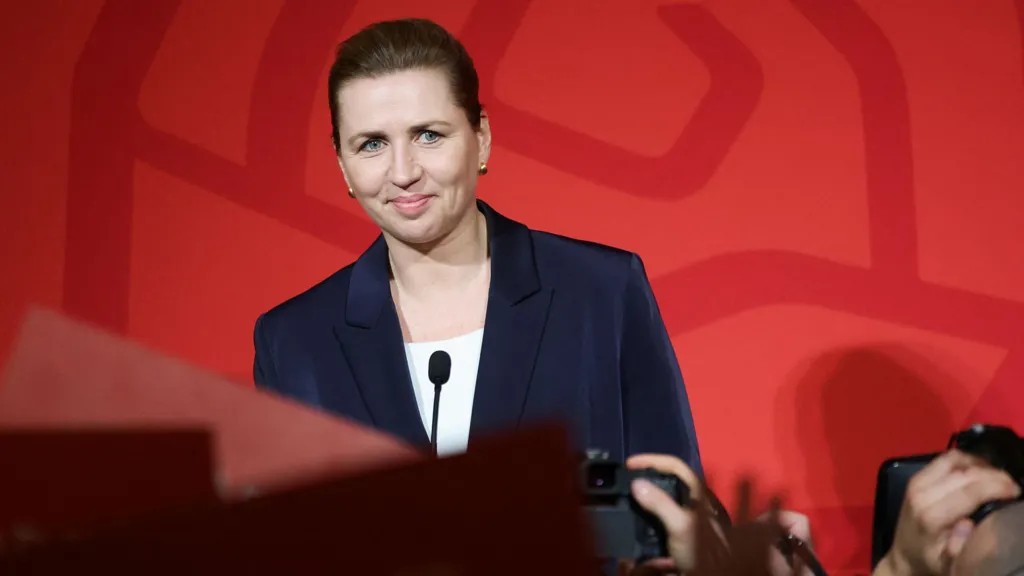
Prime Minister Mette Frederiksen's Social Democrats emerged as the largest party in Tuesday's election but suffered their poorest result in more than a century.
With 21.9% of the vote, the Social Democrats remain the single biggest force in parliament, yet the left-leaning coalition they lead fell well short of a working majority.
The so-called red bloc secured 84 seats in the 179-member Folketing, leaving it six seats below the 90 needed to govern alone.
The blue bloc on the right won 77 seats, also short of a majority.
That balance hands the small, centrist Moderates — who won 14 seats — the role of kingmaker.
Former prime minister Lars Løkke Rasmussen, the Moderates' leader, said he favors forming a government from the centre and has signaled readiness to negotiate.
Venstre, the main centre-right party, posted its worst century-long result with just 10.1% and finished behind the Green Left (SF), while the electoral field included a dozen parties in total.
Frederiksen, who has led Denmark since 2019, conceded the party would have liked a stronger showing and indicated she remains prepared to carry on as prime minister.
Tough coalition talks — which could stretch over days or weeks — now lie ahead.
Observers say a likely outcome is a centre-left alliance made up of the Social Democrats, the Red-Greens (SF), the Moderates and the Danish Social Liberal Party, but no deal has been reached and key players on the right have ruled out cooperation with Frederiksen's party.
Frederiksen had called the vote early after a surge in popularity tied to a diplomatic standoff over Greenland, but voters focused largely on domestic concerns.
Cost of living, economic stability, welfare services and environmental issues linked to agriculture and drinking-water contamination dominated the campaign.
The result marks a bruising setback for Frederiksen personally and for parties across the spectrum, underscoring a fragmented electorate and setting the stage for intense post-election bargaining.