France heads to second-round municipal votes on Sunday in contests seen as an early barometer for the 2027 presidential campaign.
Attention is focused on major cities where control could shift political momentum — notably Paris and Nice.
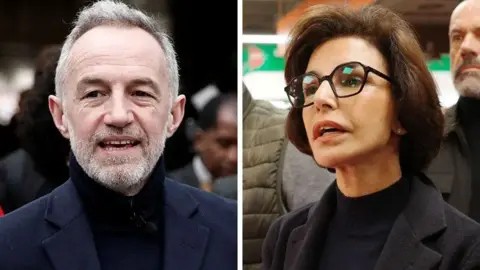
In the capital, Socialists are scrambling to hang on after a quarter-century of centre-left leadership.
Rachida Dati, the right-wing challenger, has closed the gap on Socialist Emmanuel Grégoire in recent polls.
On the Riviera, Eric Ciotti — aligned with the far right's allies — appears well placed to unseat incumbent politicians and claim a headline victory for the hard right.
The most consequential development around the country is a wave of local pacts between the hard-left La France Insoumise (LFI) and other left parties, mainly the Socialists and Greens.
These joint lists have been agreed in 26 sizeable municipalities to concentrate anti-right votes.
Toulouse illustrates the gamble: centre-right mayor Jean-Luc Moudenc led the first round, but two left candidates — LFI's François Piquemal and Socialist François Briançon — combined forces and now lead on paper.
If they prevail, Piquemal would become mayor.
The alliances have provoked fierce criticism from right-wing rivals, who accuse the Socialists of abandoning earlier condemnations of LFI.
That backlash follows a series of controversies involving LFI figures and remarks by leader Jean-Luc Mélenchon that opponents say have stoked tensions.
Left leaders argue the pacts are tactical, intended to block far-right gains.
Yet in most cities where the accords exist, the main threat is not the National Rally but the mainstream right Republicans, underscoring complex local dynamics.
Elsewhere, alliances and withdrawals are reshaping outcomes: in Marseille the Socialist incumbent benefited after an LFI withdrawal, while in Le Havre former prime minister Édouard Philippe looks set for a comfortable win — a result that would boost his national prospects.
Analysts say the municipal results will test Mélenchon's ability to consolidate left-wing support ahead of next year's presidential fight and reveal how voters react to on-the-ground coalitions.
The balance between uniting to block the far right and alienating moderate voters will be watched closely.
Whatever the verdict on Sunday, these contests will reverberate through party strategy and candidate positioning as France heads deeper into an increasingly polarized presidential campaign.