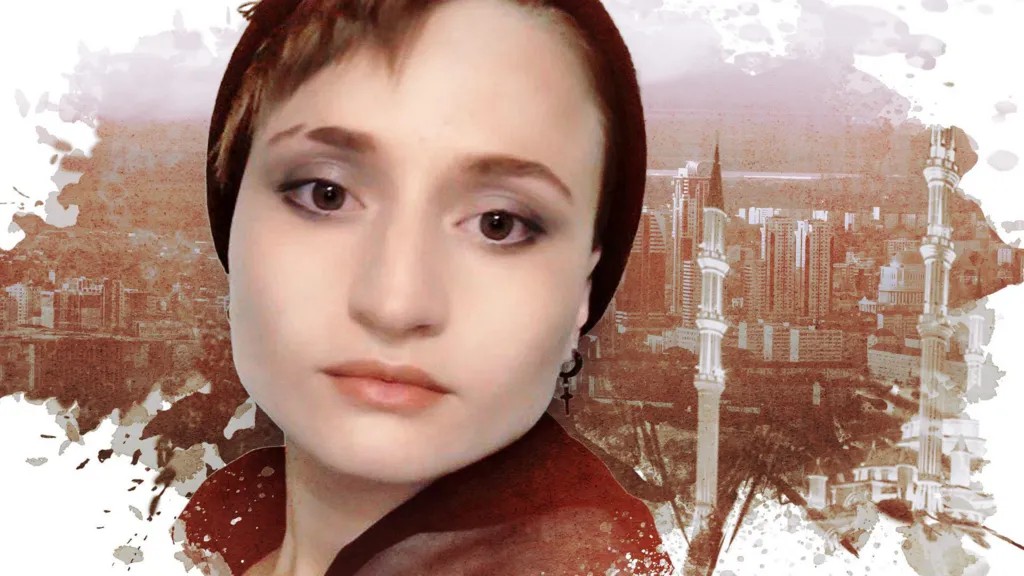
When 23-year-old Aishat Baimuradova left Chechnya earlier this year she hoped to build a life away from strict family controls and public scrutiny. Friends say she adopted a more modern appearance — shortening her hair, abandoning the headscarf and even altering an eyebrow — and began sharing candid photos online, telling people she finally felt able to breathe. In October, Armenian police discovered Aishat’s body in a rented apartment in Yerevan and have treated her death as a murder. CCTV footage showed two people leaving the building that night; one was a woman Aishat had recently met. Local reporting and social media accounts say both people later travelled back to Russia. Russians can enter Armenia without a passport, using only their internal ID, a fact that makes the South Caucasus a common, if risky, destination for those escaping the North Caucasus. Aishat reached Armenia with support from SK-SOS, a crisis group that assists people at risk from the North Caucasus. She first worked in a smaller town before moving to the Armenian capital in search of better work and more independence. Unlike many escapees who hide their identities, avoid photos and rarely meet new people, those who knew her say Aishat wanted to be visible and to trust others. SK-SOS says her family tried to persuade her to return; when she refused they cut ties. “They told her she was no longer part of the family and warned her not to contact them,” Alexandra Miroshnikova, a spokesperson for the group, told the BBC. Aishat’s uncle has denied any family involvement in her death. The BBC was unable to reach other relatives for comment. Reports say the woman last seen with Aishat had initially contacted her via social media and later arrived in Armenia, inviting her to parties. A man filmed leaving the building with them was reported by a popular Russian Telegram channel to be of Chechen origin; the investigative outlet Agentstvo has identified him as a relative of a businessman linked to Chechen leader Ramzan Kadyrov. Armenian authorities have said they are investigating two unnamed suspects but have given no further details. Chechnya, a republic in Russia’s North Caucasus, is frequently described by human rights groups as operating like a state within a state, where loyalty to long-time leader Ramzan Kadyrov can trump formal institutions. International rights organisations have documented cases of enforced disappearances, torture and extrajudicial killings there; Chechen officials have repeatedly dismissed such allegations as attempts to discredit the republic. High-profile murders of critics abroad have fuelled concern: in 2009 Umar Israilov, a former Kadyrov bodyguard, was shot dead in Vienna; Austrian investigators concluded the killing was politically motivated and linked to Chechnya. In 2019 Zelimkhan Khangoshvili, a former rebel, was assassinated in a Berlin park in an attack blamed on Russian security services. Human rights monitors point out that Aishat appears to be the first woman from Chechnya known to have died in suspicious circumstances shortly after fleeing. The case has intensified anxiety among other women who escaped Chechnya. Changes to European migration rules and new visa restrictions for Russians since the Ukraine war have narrowed routes to safety, leaving neighbouring Georgia and Armenia as more accessible options — but not necessarily secure ones. In July, for example, 24-year-old Laura Avtorkhanova, another escapee, was located in a Georgian shelter by male relatives who reportedly tried to force her return to Russia; after police intervened she remained in Georgia. Many women who have left Chechnya now avoid community gatherings, refrain from speaking Chechen in public and limit their social media footprints. One woman who asked to remain anonymous described a returning, paralyzing fear. “You can run away,” she said, “but you never truly feel free.” Chechen officials have denied any link to Aishat’s death, calling suggestions of their involvement a “terrorist information attack,” and have criticised organisations that help women flee as undermining family traditions. Armenian investigators have so far not released names or charges in the case as their inquiry continues.