
Britain is dangerously unprepared for a third world war — and experts are warning the Government must urgently consider conscription and whole-society mobilisation before it is too late.
With Putin grinding through Ukraine, Iran at war with the United States and China threatening Taiwan, the question of whether British civilians are ready for what could come next has moved from theoretical to urgent. Last year's Strategic Defence Review called for a national conversation on preparedness — but those closest to the issue say the country remains dangerously far from having it.
Lord Toby Harris, chair of the National Preparedness Commission, is blunt about the gap between ambition and reality.
"A national conversation means that every citizen is engaged in it and we're way, way short of that," he is reported to have said.
"There needs to be more going on in schools, there needs to be more going on in businesses. If you spoke to most business leaders, they would not see it as their responsibility. They would see it as something government had to do and not 'well what could be our contribution?'."
Drawing on the experiences of Britain's European neighbours, a new commission report makes the case that the UK is being left behind by allies who have already made the difficult decisions about civilian preparedness that Westminster has so far avoided.
Sweden's approach has been methodical, reports Forces News. Rather than relying on volunteers or waiting for a crisis, the government worked through its national registry of licensed electricians, selected individuals and began training them as emergency repair crews for the electricity network — one of the first targets in any modern conflict.
"That's something that is indispensable in war because the Russians will target electricity infrastructure as they already do in Ukraine," said report author Elisabeth Braw, according to the report. "If war comes, we will depend on those kinds of people, not just on people carrying arms."
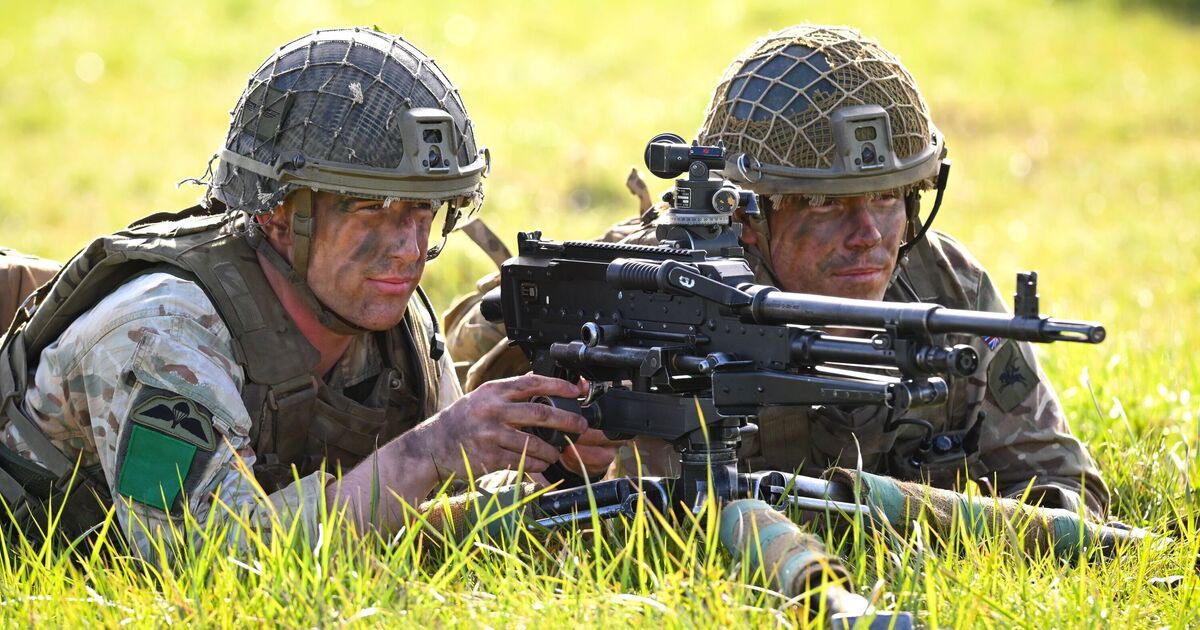
Small, exposed and sharing a border with Russia, Estonia has built a defence model the rest of Europe now studies. Its system rests on conscription and a reserve force that can be mobilised at speed. Braw reportedly believes Britain could adopt elements of the approach without reintroducing compulsory service.
"Estonia has a brilliant system of having snap exercises," she is undersood to have said. "So if you can show that you can call up your reservists on 48 hours' notice, which is what the Estonians can do, and that keeps the reservists up to date and engaged, but by conducting these exercises, Estonia also signals to Russia that all those reservists... will be able to get to where they need to be very quickly. So it would be a pain for Russia to try anything — try any military action — against Estonia."
Bringing the public into a genuine conversation about national security requires the government to be more transparent about the threats Britain faces — something experts say is long overdue.
Lord Toby warned that waiting any longer carries real risks in a media environment awash with hostile disinformation.
"Given that there are active attempts to undermine the trust that people have in public authorities in this country, think about all the misinformation and disinformation that is now weaponised through social media," he said. "You've got to be starting to build that confidence so that people feel, yes, they can be self-reliant and they can trust the authorities to support them."
Former Staff Sergeant Dave Butler, who served in the British Army for 21 years between 1967 and 1998, told Forces News he is less optimistic about whether that window still exists.
"I think society today is a lot more confused about what is real and what isn't real," he told BFBS Forces News. "I think the general public have lost complete faith in the Government.
"At the moment, even if the Government was trying to tell us that we were two days away from World War Three, there would be sections of the general public who wouldn't believe it. They'd think it was fake news, and therefore they would react accordingly. And I think this is going to be one of the challenges over the next three to five years."
Braw sees grounds for hope. The Covid crisis demonstrated that when the stakes are made clear, the British public will respond — and the collective resilience shown during the Blitz remains the most powerful historical example of what the country can achieve when its back is against the wall.
Few moments in recent history have made the question more pressing. Whether the government finds the courage to have an honest conversation with the public about what the coming years may demand — and whether the public would answer that call — may be the defining question of our era.