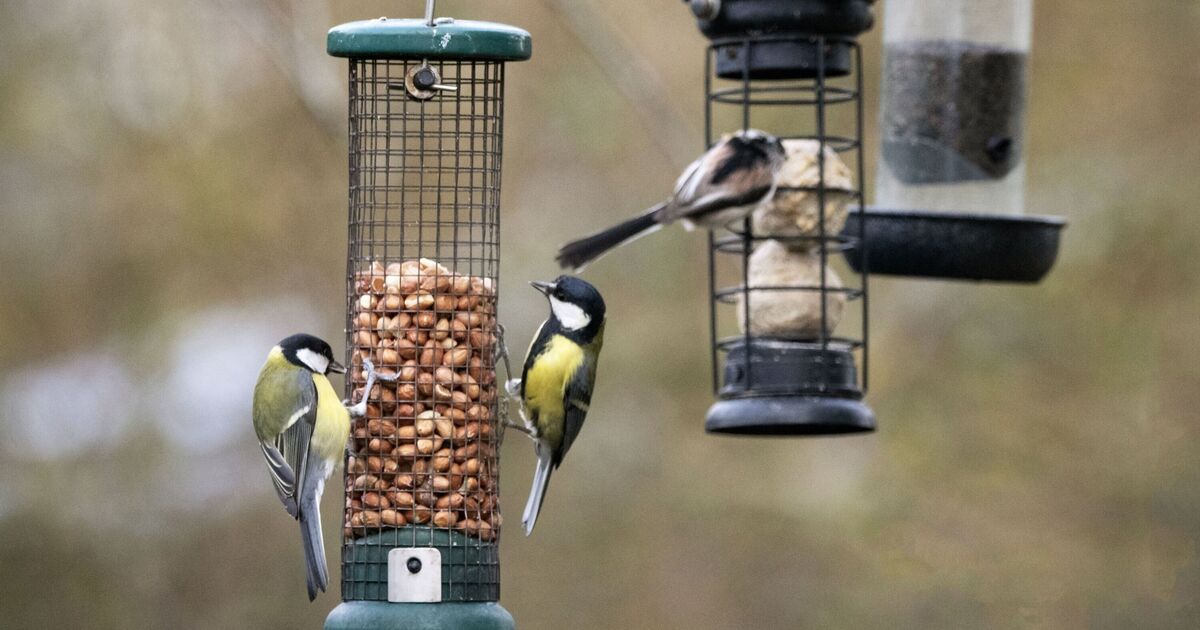

Brits with bird feeders in their gardens have been urged to remove them over the summer to curb the spread of avian disease. The Royal Society for the Protection of Birds (RSPB) has warned bird lovers that failing to take down feeders between May and October could speed up the spread of a parasitic disease. Species, including the greenfinch, have already experienced a population drop linked to trichomonosis, which is transmitted more easily when birds cluster around feeders in warm weather.
The RSPB advises people to offer avian wildlife small amounts of protein, such as mealworms or fat balls, in lieu of feeders filled with seeds or nuts to help curb the spread of the disease.
A spokesperson for the charity said: "Research has shown a worrying decline in some of our much-loved garden birds due to a disease called trichomonosis. This is a highly contagious disease and can spread where birds gather in large numbers such as bird feeders."
They added: "Greenfiches, for example, have dropped by over 65% in the last three decades - and you may have seen this decline yourself."
When the Big Garden Birdwatch, the world's largest garden survey, was launched in 1979, greenfinches ranked as number seven in the top 10 birds seen.
This year, they were down to number 18, with the RSPB stressing the important role alternating feeding patterns can play in protecting the garden bird species.
Around 6 million greenfinches and chaffinches are thought to have died because of the disease in recent years.
Beccy Speight, chief executive of the RSPB, said: "Feeding birds is something millions of us love and value, but the science shows us that birds such as greenfinches have been affected by the spread of disease at feeders.
"We're not asking people to stop feeding, just to feed in a way that protects birds' long-term health.
"By making small changes together, we can ensure garden feeding continues to be a positive force for nature."