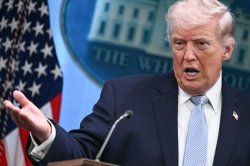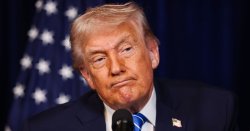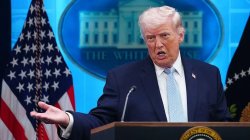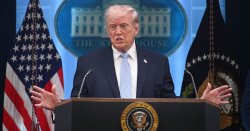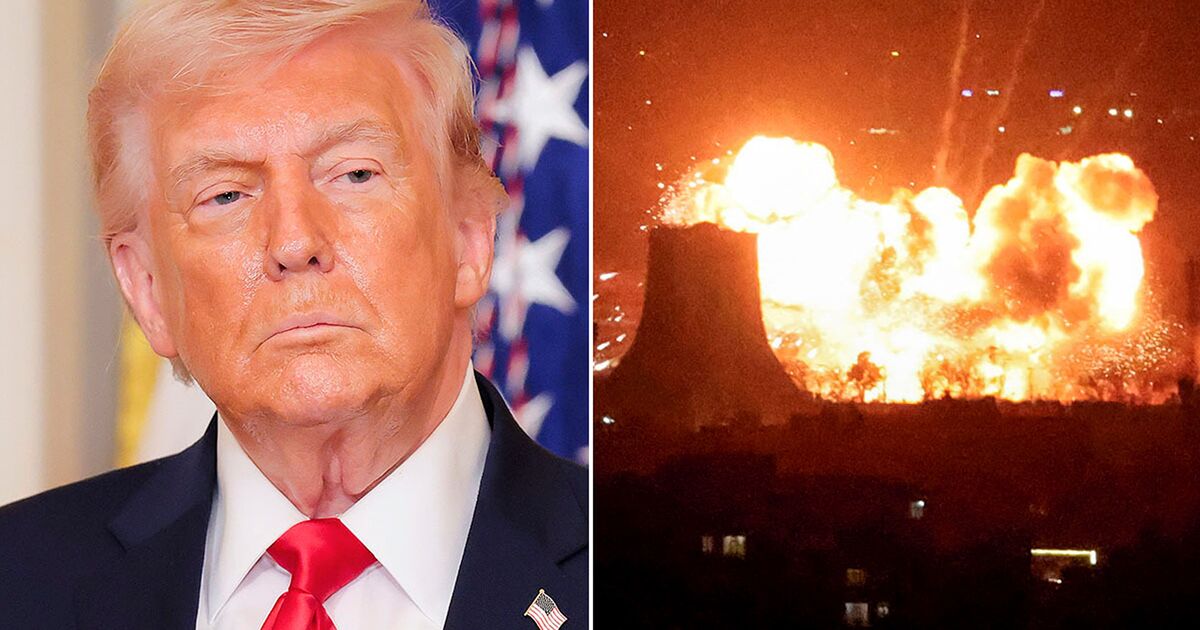

A Chinese-Canadian academic dubbed "China's Nostradamus" who predicted Donald Trump would step back from his most extreme threats against Iran — nuclear strikes — has been vindicated tonight after the US president agreed a two-week ceasefire rather than following through on his promise to "end" Iranian civilisation.
But Professor Jiang Xueqin's second prediction has long-lasting dangers for Trump: that American boots will eventually hit Iranian soil regardless, as the United States finds itself trapped in a conflict it cannot win from the air alone.
Jiang, a Beijing-based educator and the creator of the globally followed YouTube channel Predictive History, delivered his analysis to students at Moonshot Academy in Beijing last month, reported Jordanian outlet Roya News — framing the US-Iran war not as a contest of firepower but as a game of strategic nerve, in which the side with the most flexibility, not the most weapons, tends to prevail.
His central argument was that Iran, despite being outgunned, has been controlling the tempo of the conflict in a way the United States has not. While Washington has relied on air power and a rigid escalation ladder — moving from targeted strikes through to infrastructure attacks and implicit nuclear menace — Tehran has responded with precision, picking its moments and protecting its options.
"Calibration is ultimately about strategic flexibility," Jiang reportedly told his students. "The person with the most options and a flexible strategy will usually win the fight."
To illustrate the point, Jiang drew on a classroom analogy according to the report — a school bully who escalates relentlessly against a new student who absorbs pressure, waits, and chooses his moments. The bully's relentless pressure eventually becomes a liability; the student's patience becomes his greatest weapon.
Jiang was reportedly blunt about what he sees as a structural flaw in US military thinking. He is said to have described American strategy as an inverted pyramid — one that places air power at the top and keeps ground forces to a minimum — and argued this is precisely the wrong way to fight a war of attrition.
"Wars are usually wars of attrition," he is understood to have said. "If you want to win, your cheapest and most flexible resource, soldiers, should form the base of your military strategy."
Tehran, by contrast, has moved selectively — hitting American radar installations and air defence systems while keeping a stranglehold on the Strait of Hormuz. These moves, Jiang argued in the report, allow a technologically inferior force to punch far above its weight by keeping its adversary permanently off balance.
"Iran's advantage lies in flexibility," he reportedly said. "Control of escalation timing allows a smaller or less advanced force to influence outcomes disproportionately."
Applying game theory to the conflict, Jiang set out what he sees as the core objectives of each player.
Washington's primary aim, he argued, is to break Iranian power and lock in American dominance over the region's oil flows. Tehran is playing a more contained game — securing the Strait and chipping away at the American footprint across the Middle East. Israel is pursuing a parallel objective: weakening both Iran and the United States to establish itself as the dominant regional power.
Each of these goals pulls against the others, according to Jiang's theory, creating a three-way strategic trap in which every move by one actor forces the others to respond — a dynamic that tends to drag conflicts out and punish the side with the least clearly defined endgame most severely.
Modern conflict, he stressed, is not decided by weaponry alone.
"Wars are not just about weaponry," he reportedly said. "They are about controlling the narrative, political relationships, and resources in a way that is strategically advantageous."
Jiang's prediction that Trump would not resort to nuclear weapons has held — at least for now. Tonight's ceasefire announcement, in which Trump accepted Iran's ten-point framework as a basis for negotiation, suggests the president blinked before reaching the most extreme rung of the escalation ladder.
But Jiang's second forecast carries a troubling implication for Washington. His analysis points to an uncomfortable conclusion: that the arithmetic of the conflict will eventually overwhelm political resistance at home and budgetary constraints, leaving the Pentagon with no viable alternative to a ground campaign in Iran.
Air power alone, his analysis suggests, cannot deliver the kind of decisive outcome America is seeking — and the longer the war continues, the more that reality will press in on decision-makers in Washington.
For now, a fortnight of ceasefire buys time. Whether it holds — and whether the ground troops Jiang predicted ever materialise — remains to be seen.