
The UK Health Security Agency (UKHSA) has warned of a virus that is "highly contagious." In a post shared on X (formerly Twitter), the agency urged parents and caregivers to stay informed about how to protect themselves and their little ones against measles. It directed readers to a recently published blog post for more guidance and information on the virus.
The UKHSA stated in the blog post: "Measles is highly contagious so even a small decline in vaccine uptake can lead to a rise in cases. There has been a resurgence of measles in England and around the world in recent years."
In 2024, England recorded 2,911 laboratory-confirmed cases which is the highest number recorded in decades. Figures for 2025 show 959 confirmed cases, mostly among unvaccinated children under the age of 10.
The UKHSA added: "The recent measles outbreak in Enfield, north London, is a reminder of how easily it can spread in an area with low levels of vaccination."
READ MORE: Panic as Victorian disease spreads across 50 UK areas – see map
READ MORE: The 5 Victorian-era horror diseases that are back and ripping through the UK

Measles is "one of the most infectious diseases in the world," the UKHSA said. It is caused by a virus and spreads easily through coughing and sneezing, with early symptoms resembling those of a common cold.
According to the NHS, the first symptoms of measles include a high temperature, a runny or blocked nose, a cough and red, sore and watery eyes.
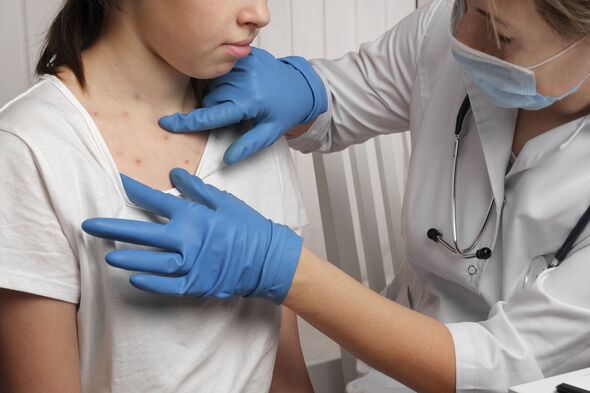
Small white spots may appear inside the cheeks and on the back of the lips a few days later, typically lasting a few days, before the characteristic measles rash spreads across the body. Most people will usually start to feel better after 7 to 10 days.
Complications such as ear and chest infections, fits, diarrhoea, and dehydration in younger children can occur. In rare instances, meningitis or encephalitis can occur, which can lead to long-term disabilities or even death, according to the UKHSA.
Babies, pregnant women, and people with weakened immune systems are at higher risk of complications.

The agency warned that uptake of routine childhood vaccinations is the lowest it has been in 10 years and is well below the 95% needed to protect the population and prevent measles outbreaks, which is giving measles a "chance to get a foothold in our communities."
Achieving high vaccination coverage across the population is therefore important to protect children but also to protect even younger children who have not been vaccinated yet and other vulnerable individuals.
The MMRV vaccine, which protects against measles, mumps, rubella, and varicella (chickenpox), replaced the MMR vaccine in the routine childhood program from January 2026. Children receive their first dose at 12 months and a second at 18 months, while older children and adults who are not up to date can catch up through the NHS.
Measles is highly infectious, with an R number of 15, meaning one person could infect 15 others in a non-immune population. Travellers should ensure they and their children are fully vaccinated before going abroad to prevent infection and avoid spreading the virus on their return.