
Iran is losing every battle, yet the US might lack the diplomatic and economic stamina to end it. Iran’s initial attempts to divide the US’s allies in the region by striking civilian infrastructure across the Arab world have not been as successful as they hoped. With most of their air defences destroyed last June, their navy and air force has been largely obliterated. Even their proxies in Lebanon and Yemen, despite pledging themselves to the Ayatollah’s “axis of resistance”, have yet to join strikes against shipping or US bases.
With Maduro’s Venezuela and now Iran, Trump aims to disassemble Xi Jinping’s loose coalition of authoritarian states and their proxies. Together with Russia, Xi’s lineup of anti-western petrostates gave him real strategic depth in a conflict, or trade dispute, with Washington – the capacity to endure Western tariffs and even sanctions and banking restrictions – even in the event of a crisis over Taiwan.
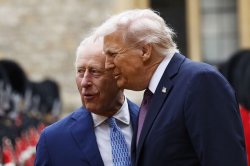
Read more: King Charles bombshell as former aide says US state visit should not go ahead
Read more: Keir Starmer torn apart on GB News in explosive five-word bombshell
Beijing secured cheap and abundant oil, a vast supply of rare earth metals, and markets for its mass-produced military materiel where they could rest assured it would be well-used hurting the US, its allies, and the rules-based international order upon which Western influence relies. They could also keep the US bogged down in the Middle East and less able to project power into the East.
Now, Xi’s coalition looks fundamentally spent. Russia, after four years in a war where they have suffered an astonishing 1.25 million casualties, is humbled and reliant on Beijing. Israel and the US have suppressed Iran and its proxies, who will no longer be able to supply Russia with the thousands of Shahed drones it uses to murder Ukrainian civilians. Venezuela is now firmly outside of Beijing’s control.
Xi’s many successes in improving links with Mohammed bin-Salman’s Saudi Arabia and the Gulf States have been undermined – and China cannot defend Iran without alienating them. China also has pulled any punches against Trump, ahead of the President’s visit to China next month – for a deal the CCP needs to shore up the Chinese economy.
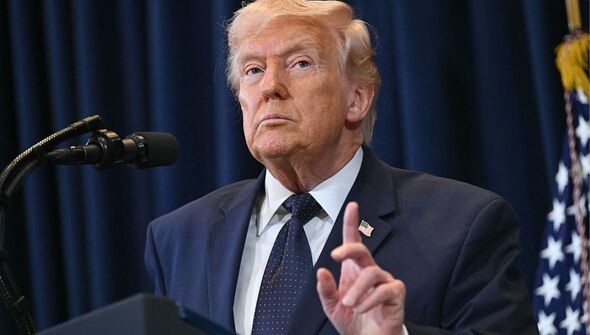
Even so, Donald Trump was manifestly unprepared for the economic fallout that has erupted following his war against the Iranian regime. It was not Iran’s missiles but global stocks in the red and oil past $100 a barrel that spooked Trump into announcing that the war was “very complete, pretty much”.
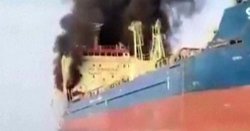
Unfortunately for the world, Iran has enormous missile and drone reserves which can continue to barrage the region’s infrastructure and shipping for months. The regime is backed into a corner where rocketing the price of oil and grinding the region to a halt represents their regime’s best chance of survival.
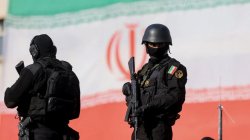
Each of the IRGC’s 125,000 soldiers knows that his life is going to get considerably worse if the regime falls. There is no limit to the tyranny and misery that they will be willing to cause to their subjects – especially not under their new leader, Mojtaba Khamenei, who has earned a reputation in Iran as the embodiment of the harsh, hard-line, corrupt and coercive state.
The question now is not simply that the peace looks like, but whether ending the war is something Trump and Israel still have the power to stop.
Roughly a fifth of global oil consumption passes through Hormuz – the most notorious energy chokepoint in the world. Any prolonged disruption inevitably translates into higher energy prices, inflationary pressure and economic strain – especially for Europe and the UK, which have made themselves energy-poor by refusing to exploit oil and gas resources due to the decade-long folly of net-zero.
Russia stands to profit enormously from higher prices, and the rest of the world will see huge financial incentives in helping Russia evade Western sanctions.
The conflict is also placing enormous pressure on Western military resources. Modern high-intensity warfare consumes vast quantities of missiles, precision munitions and air-defence systems. Even the United States, with the largest military in the world, cannot fight simultaneous conflicts indefinitely without confronting hard trade-offs.
In this sense, the war exposes both the strength and the limits of American power. Washington retains unparalleled ability to project force into the Middle East. But projecting force is not the same as sustaining strategic advantage.
The longer the conflict continues, the more it tests the resilience of Western defence industrial bases and the political appetite for prolonged confrontation. With an Iranian Shahed drone costing $30,000 USD to make, but $4m for us to shoot down, Iran can exact its pound of NATO’s flesh.
As the war drags on, China may also be able to position itself as an intermediary, winning support in the energy-starved global south and normalising the Chinese Communist Party’s role as a peacemaker. Criticism from Europe about the legality of the strikes feeds into the narrative that the West are no better than their authoritarian enemies. The embarrassing weakness of the UK’s response under Starmer advertises that most European armed forces are paper tigers.
China may also benefit from ties with Gulf States weary of US geostrategy and looking to hedge their bets with Beijing.
In an increasingly bipolar world, perception matters as much as power. Trump must look to contain the war that they have started while they still retain the initiative. If they cannot, the West could face another drawn-out conflict in the Middle East.
Dr Azeem Ibrahim OBE is the Chief Strategy Officer at the New Lines Institute for Strategy and Policy and author of A Greater Britain: Rethinking UK Grand Strategy and Statecraft (Biteback:2026)