 BBC
BBC"They keep giving me free beer"
John Jones from Queensferry in North Wales is having the time of his life, sipping foamy cold larger by a glistening pool.
He and family have dozens of empty loungers to choose from at their resort a few miles from Ayia Napa, where management are clearly keen to keep the few customers they have happy.
"We knew the drone had hit the British base here" says John, "it didn't put us off at all".
The strike on RAF Akrotiri on 1 March put Cyprus in the headlines and caused a flurry of flight cancellations.
However, those who have ventured like John seem particularly pleased with their decision.
"People here are so friendly and generous" he says, preparing for another beer to arrive, "we've no worries, no problems."

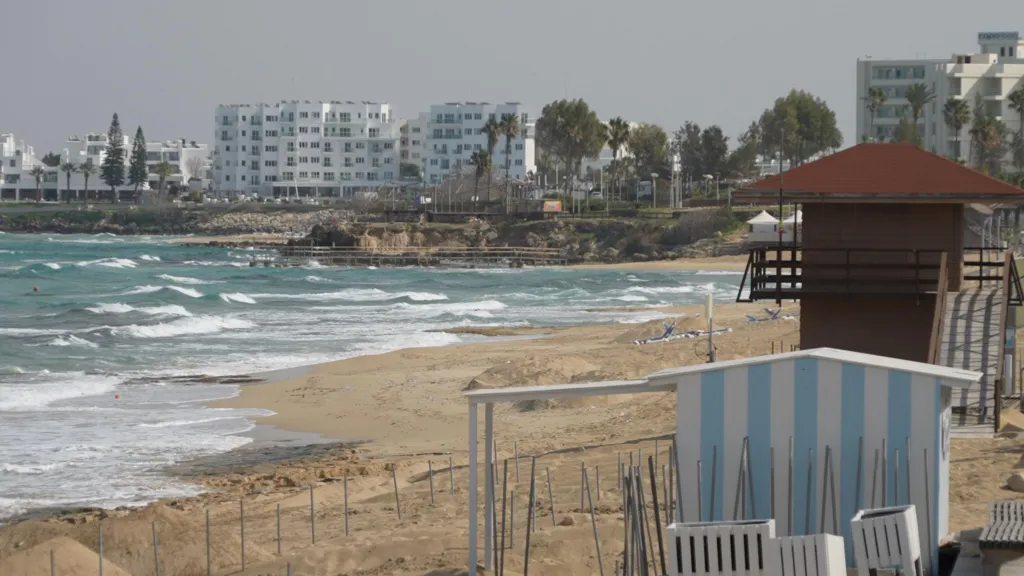
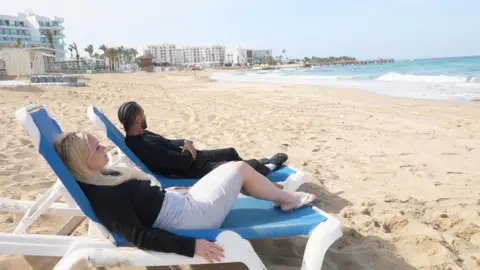
Down on the beach, Swiss couple Alexandra and Jehiel tell me the war changed their travel plans, as they'd originally booked to fly to Thailand.
Despite protestations from their parents, the couple chose to come to Cyprus instead, where they have the sands to themselves.
"Our families were most stressed about this," Alexandra says.
"We arrived at the airport and there [were] some military guys but we spoke to the taxi driver and he told us we don't need to be scared about the situation here, that nothing would happen."
Their clubbing plans have been hampered however.
"We have tried," Alexandra explained, "we went to Ayia Napa to meet some people but there were like two bars open."
"Its been a good time to chill" adds Jehiel, settling back on to his sun lounger.
Last year was record-breaking for Cyprus' tourist industry, with more than 4.5 million visitors.
There is clearly anxiety that the war could stunt that growth, even though the target of the drone attack was at the British base at RAF Akrotiri.
Chryso Tsokkou is the director of Tsokkos Hotels and Resorts, the largest chain on the island with 25 venues.
She says the start of a war triggered a wave of cancellations, but things have now started to subside.
"It was not normal but it was expected" she explains "the immediate arrivals had to make a decision as in the first 48 hours there were flight cancellations".
"Currently all the hotels are open" Chryso stresses, "its normal to reschedule, we had some people cancel for the immediate period and some cancellations for summer but we have also had new bookings".
The main tourism season here doesn't start until April or May but Philokypros Roussounides from Cyprus' Chamber of Commerce is worried about the rest of the year.
"The island is not directly affected by the conflict," he says, "but in tourism perception can sometimes travel faster than geography.
"Tourism planning is highly sensitive to perceptions of regional stability."
The vast majority of businesses on the island are operating as normal and most Cypriots have been able to continue daily life unhindered.
Those living in villages near RAF Akriotri have now been told they can return home after the lifting of the evacuation order by the Cypriot government.
It says the area will remain on heightened alert with regular patrols, although no decision has been taken by the British authorities over returning families who live on the base.
Back beside the pool, British ex-pat Victora O'ffe tells me the perception of Cyprus being caught in the cross-fire is far from reality.
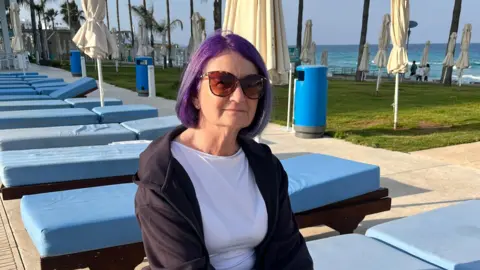
"If we didn't have access to British television we wouldn't know its happening" she says.
She's disappointed that family members in the UK have cancelled their trip over to see them.
"We tell them to come but tour operators are telling them to rebook to a different destination.
"There's no reason not to come, its really safe" Victoria insists, "the weather's fantastic, food's fantastic, why would you not come here?"

40 PerFlyer
76 PerFlyer