
Warnings have emerged that the US-Israel war on Iran represents "the final catalyst for a third world war", yet there may still be a glimmer of hope.
Richard Shirreff, a British former deputy supreme allied NATO commander, sparked considerable alarm when he said he "cannot remember a more perilous moment in geopolitics in his lifetime" and that the campaign has "already spiralled out of control."
Since the US and Israel launched their offensive against Iran, many fear the world's most unpredictable leaders — Russia's Vladimir Putin, North Korea's Kim Jong Un, and China's Xi Jinping — are watching with bated breath, poised to advance their own respective agendas across Europe, South Korea and Taiwan into a wider, global conflict.
The UK has, thus far, largely stayed on the sidelines — much to the frustration of President Trump. And despite inflammatory rhetoric from figures within Reform, the prospect of direct involvement in the conflict remains deeply unpopular amongst Britons.
Just eight percent of the British public believe the UK should become actively involved, whilst 46 percent maintain that the country should only defend itself when necessary, according to YouGov polling.
Read more: WW3 fears as expert warns Iran has lured Trump into a military trap
Read more: Prepper shares eseential kit to survive WW3
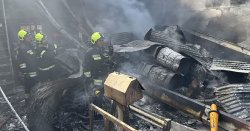
Trump has insisted he has already secured victory in the Middle East and that the conflict will conclude "soon", yet hostilities have already spilled beyond the immediate region, with Iran striking nations including the United Arab Emirates, Qatar, and Bahrain. British nationals have been left stranded and vast swathes of airspace shut down as Iran continues to unleash its retaliatory strikes.
However, financial markets are already experiencing the shockwaves after Iran sealed off the Strait of Hormuz - a narrow maritime passage approximately 31 miles wide and amongst the world's most crucial trade routes. Last year witnessed around 20 million barrels of oil traverse it daily, but Iran has vowed to "set ablaze" any vessel that attempts to make the journey.
Insurers have withdrawn policies for cargo ships, and the market has witnessed dramatic fluctuations in price for oil and gas. The International Energy Agency, which comprises 32 countries, has authorised the "largest ever" release of oil reserves in a bid to stabilise markets - 400 million barrels will be made available, representing approximately four days' supply.

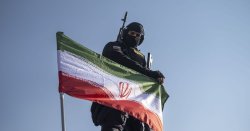
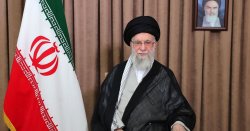
The President of Iran might have issued an apology to their Arab neighbours for strikes against their countries but the Islamic Revolutionary Guard Corps (IRGC) adopts no such stance. The US killed the former Supreme Leader of Iran, Ali Khamenei, within days of the conflict commencing and now, his son, Mojtaba Khamenei, has assumed the role.
A mid-ranking religious scholar, the 56 year old is understood to be a hardliner with the IRGC who have threatened to target "all military bases and interests of criminal America and the fake Zionist regime on land, at sea, and in the air across the region". International relations expert Professor Anthony Glees explained that whilst the picture is grim, there remains cause for optimism.
"It takes two to tango and the war against Iran will be 'complete' when the ayatollahs and their revolutionary guards call it a day. Right now there's no sign of that. Their weapon of choice, oil is still being successfully deployed to the great pain of the whole of the western world.

"Of course because Trump has offered so many different war aims no one including Trump has any idea of what 'victory' looks like," Professor Glees explains, "However if he has any sense left - which I doubt - he'll announce victory sooner rather than later. He definitely has it in his power to do so. The ayatollahs are self-evidently not going anywhere soon."
Military experts suggest there may be further grounds for optimism regarding de-escalation. Whilst China and Russia remain allies of Iran, neither has indicated any intention of entering into direct conflict with the US.
Trump revealed he had a 'very good [phone] call' with Putin, who is looking to the president to help secure a favourable deal in the war with Ukraine. Meanwhile, China is reportedly focused on resolving the long-running trade war with America and remains chiefly concerned about oil.

"Ultimately, Beijing doesn't see regime change in Iran as a worst-case scenario. China is willing to work with whatever leadership emerges after the strikes as long as it protects oil flows and prioritises shared economic interests," Foreign policy analyst Yun Sun wrote in Foreign Affairs. "Only if these interests are threatened, or if a protracted war of attrition disrupts oil shipments through the Strait of Hormuz, will Beijing have to reconsider its place on the sidelines and respond more forcefully.
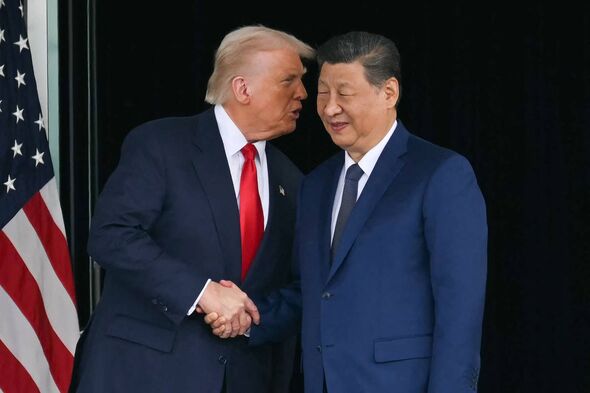
"Beijing is also unlikely to try to backstop the Iranian regime because of China's relationship with the United States. US President Donald Trump and Chinese leader Xi Jinping are scheduled to meet at the end of March - a meeting that carries the prospect of a potential grand bargain between the United States and China that could lead to a real détente after eight traumatising years of great-power competition. Beijing does not want a war in the Middle East to derail its effort to work with Trump."
Meanwhile, Russia could be poised to capitalise on the constrained oil supply by selling fuel to China and India. Whilst Iran remains one of its closest regional allies, experts suggest Moscow would value the much-needed revenue for its own war effort above loyalty.

Professor Glees explains, "Trump, worried sick about the impact of the oil war on MAGA USA voters, is going to let Putin export oil again. That's terrific news for the evil dictator in the Kremlin."
Sergey Vakulenko, a senior fellow at Carnegie Russia Eurasia Centre, told The Guardian: "When a good fifth of global oil supply and roughly a quarter of seaborne trade is effectively locked up, that's a boon for Russia. Some of the Russian oil that's been sitting on tankers will definitely find buyers now."
This view was reinforced by Kremlin TV host Vladimir Solovyov, who declared to the nation: "For our budget, the attack on Iran is a big plus. If Trump strikes Iranian oilfields, then, as unfortunate as it sounds, we would become one of the few remaining oil-producing countries."