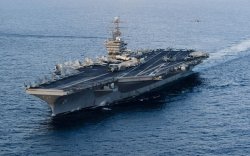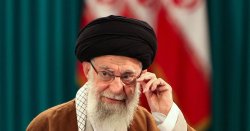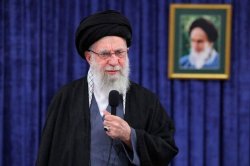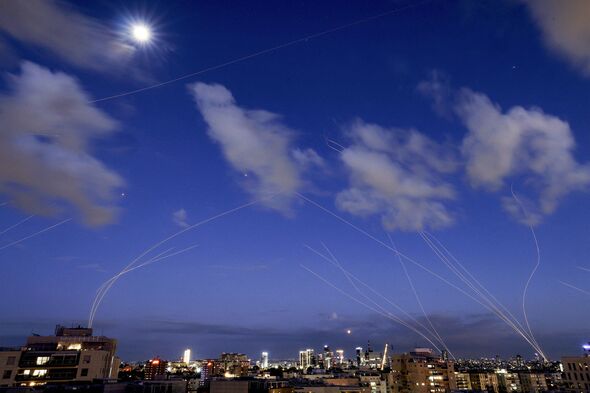

Fears of a potential Third World War have risen following a series of airstrikes across the Middle East in a major spike in escalation of tensions. US and Israeli forces attacked Iran on Saturday morning in what the two countries described as a “pre-emptive” strike against a Tehran government intent on developing nuclear weapons.
President Donald Trump said “major combat operations” were underway against Iran and urged the Iranian people to “take over your government”, signalling he is seeking to secure a regime change. An Israeli military official has claimed “several senior figures” from the Iranian regime had been “eliminated”, however this has not been verified. The attack prompted retaliation from Iran, with missiles reported to have targeted Israel and countries across the Middle East, including the United Arab Emirates, Qatar and Bahrain.
READ MORE: Iran issues chilling WW3 threat to hit back with 'unforeseen weapon'
READ MORE: US attack on Iran is moment of extreme peril for world with the UK impacted

Britain was not involved in the strikes on Iran, and the Government has advised UK nationals in some parts of the Middle East to “shelter in place”.
In a statement, Sir Keir Starmer confirmed British aircraft in the region were “in the sky” as part of “co-ordinated regional defensive operations to protect our people, our interests and our allies” and also condemned Iran’s retaliatory action “in the strongest terms”.
It comes days after the fourth anniversary of the full-scale war in Ukraine as tensions across the world continue to rise.
*** Ensure our latest news headlines always appear at the top of your Google Search by making us a Preferred Source. Click here to activate or add us as Preferred Source in your Google search settings. ***
So, if the unthinkable was to happen, which nations are deemed the safest to escape to?
The Express has taken a look at the 2025 Global Peace Index (GPI) to see which nations are seen as the most peaceful, and therefore perhaps a safe haven in a large-scale war.
The index covers 99.7% of the world’s population and is calculated “using 23 qualitative and quantitative indicators from highly respected sources”.
It measures the state of peace across three areas; the level of societal safety and security, the extent of ongoing domestic and international conflict and the degree of militarisation.

Iceland came out in first place in the most recent rankings.
The country has never taken part in a full-scale war or invasion and is geographically remote, one potential advantage in conflict.
Iceland has no military but is a member of NATO, meaning it comes under the alliance’s Article 5 collective defence clause — an attack on one, is an attack on all.
This could potentially, in theory, undermine Iceland’s safe haven status but the country is unlikely to be a key target in a possible war due to its lack of a military footprint.
NATO is made up of 32 nations, any can trigger the Article 5 agreement.

Ireland was named second in the GPI rankings.
The country maintains a policy of military neutrality but does have a small defence force.

In third was New Zealand which is among the world’s most remote nations in the south-western Pacific.
New Zealand does have a military and is generally considered very safe.
Its physical isolation from the rest of the world likely means it would be a safer haven in the event of a Third World War, with fighting probably to be concentrated elsewhere.
Other countries in the top 10 of the 2025 GPI include Austria, Singapore, Finland, Denmark and Switzerland, which is well-known for its neutral stance.
The GPI index, described as “the world’s leading measure of global peacefulness”, is produced by the Institute for Economics & Peace think-tank.
It stated the latest report showed a “continuing decline in global peacefulness, with many key indicators that precede major conflicts higher than at any time since World War II”.
Global peace is at its lowest level since the index was first launched in 2007, it added.