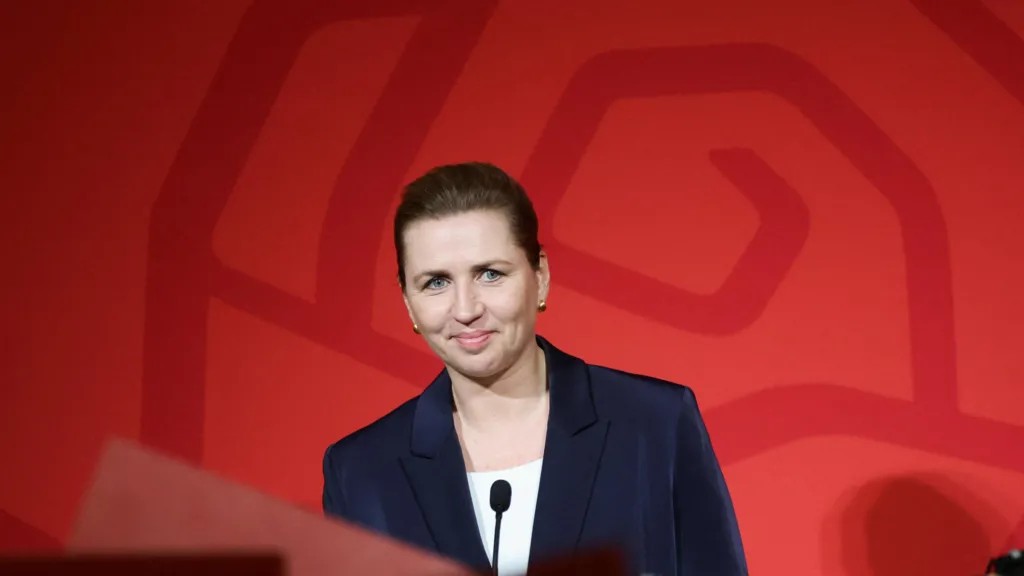
Denmark's Social Democrats emerged as the largest party in Tuesday's election but failed to secure the parliamentary majority needed to govern alone.
Prime Minister Mette Frederiksen's party took 21.9% of the vote and won 38 seats — its weakest result in more than a century.
The left-leaning “red bloc” has a narrow lead with 84 seats, while the centre-right “blue bloc” holds 77.
Neither side reached the 90-seat threshold in Denmark’s 179-member Folketing, setting the stage for lengthy coalition talks.
At the centre of negotiations are the Moderates, who hold 14 seats and can effectively decide which coalition forms.
Their leader, former prime minister Lars Løkke Rasmussen, has signalled openness to a centrist alliance and positioned his party as kingmaker.
Frederiksen, who has led the country since 2019 and sought an early vote after high-profile tensions over Greenland, said she is willing to continue as prime minister.
But potential partners in the blue bloc are already ruling out cooperation with her party, complicating any right-leaning path to power.
Political analysts see a likely option as a centre-left coalition combining the Social Democrats with the Red-Greens, the Moderates and the Danish Social Liberal Party.
Even so, talks could stretch over days or weeks as parties haggle over policy priorities and ministerial posts.
The campaign was dominated by domestic worries rather than geopolitics.
Voters focused on rising living costs, the economy and welfare, alongside growing concern about pesticide contamination linked to intensive pig farming and agriculture’s environmental impact.
Frederiksen’s gamble to call an early election — partly driven by the fallout from U.S.
interest in Greenland — did not translate into the clear mandate she sought.
With a fragmented parliament, Denmark now faces uncertain and potentially protracted coalition-building to determine its next government.